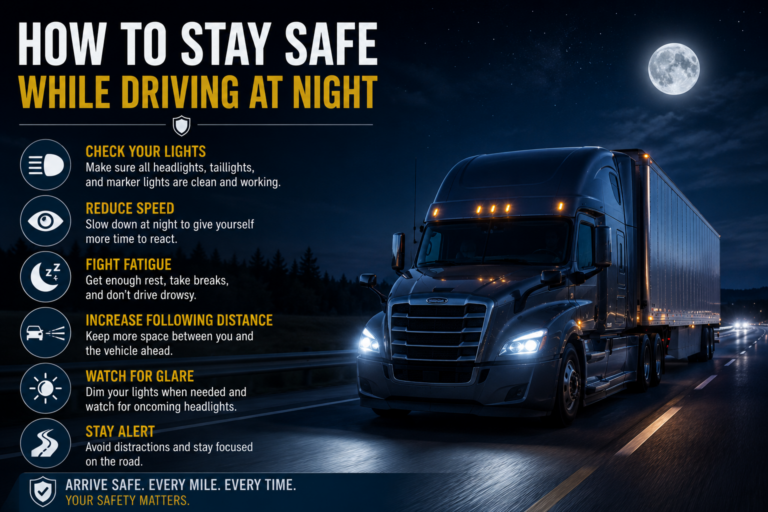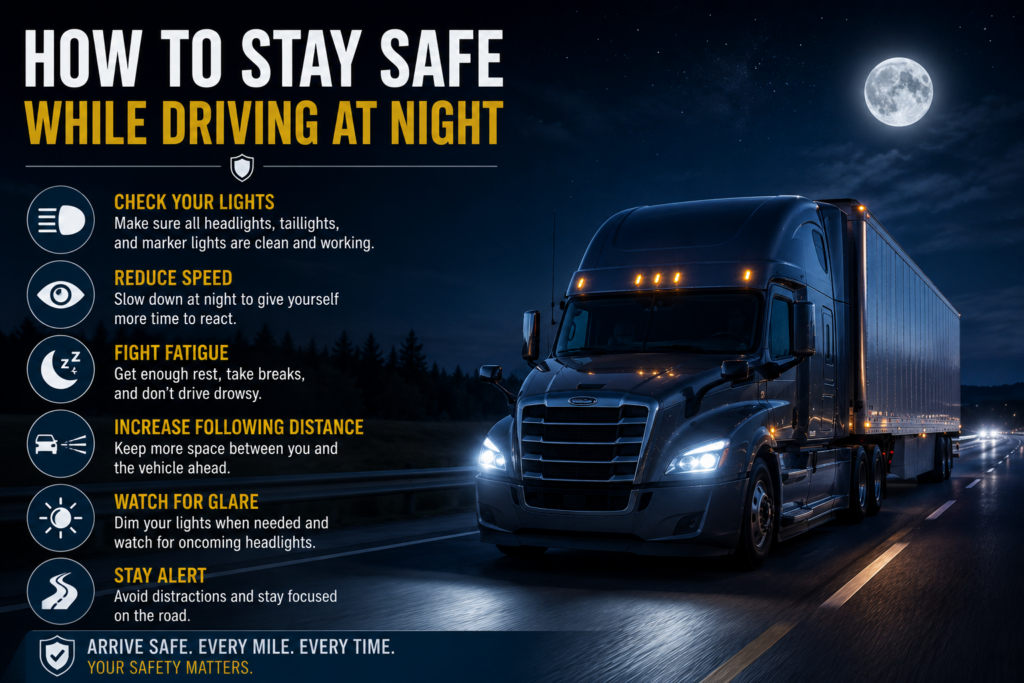
Driving at night can be significantly more challenging than driving during the day. Reduced visibility, driver fatigue, glare from headlights, and wildlife crossing the road all increase the risk of accidents. According to the National Safety Council (NSC), fatal crashes are about three times more likely to occur at night than during daylight hours despite lower traffic volumes.
Whether you’re a professional truck driver or a daily commuter, following a few essential safety practices can greatly reduce your chances of being involved in a nighttime accident.
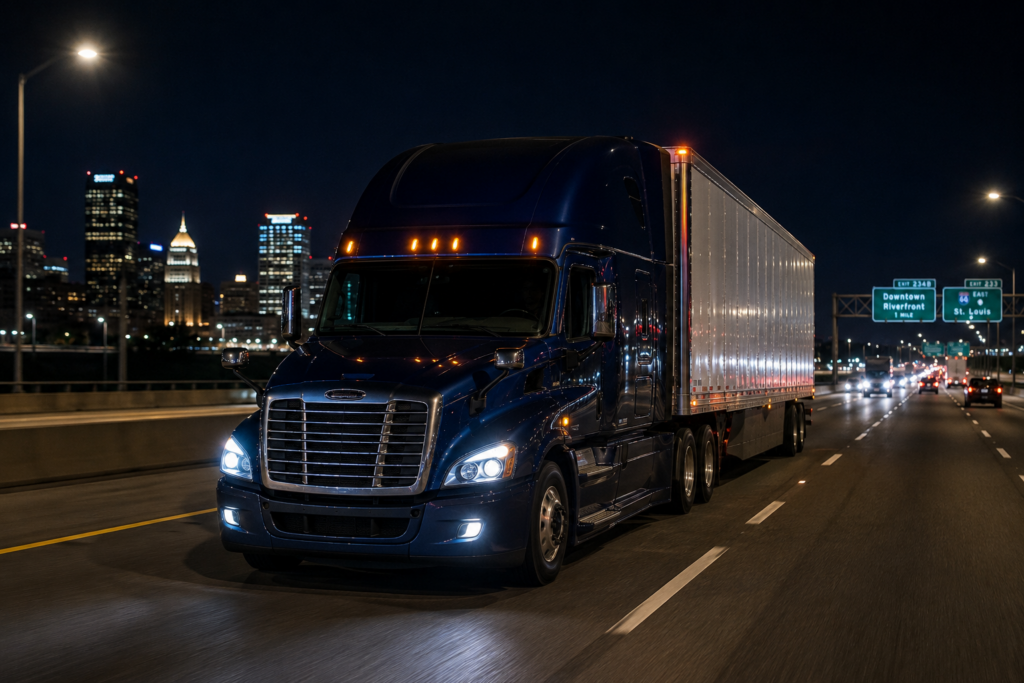
Why Is Night Driving More Dangerous?
Although roads are usually less congested after dark, nighttime driving presents unique hazards. The biggest challenge is reduced visibility. Human eyes simply don’t perform as well in low-light conditions, making it harder to recognize pedestrians, road signs, animals, and unexpected obstacles.
The National Highway Traffic Safety Administration (NHTSA) explains that reduced visibility, fatigue, alcohol impairment, and speeding all contribute to higher nighttime crash rates:
https://www.nhtsa.gov/road-safety/night-driving
1. Make Sure Your Headlights Work Properly
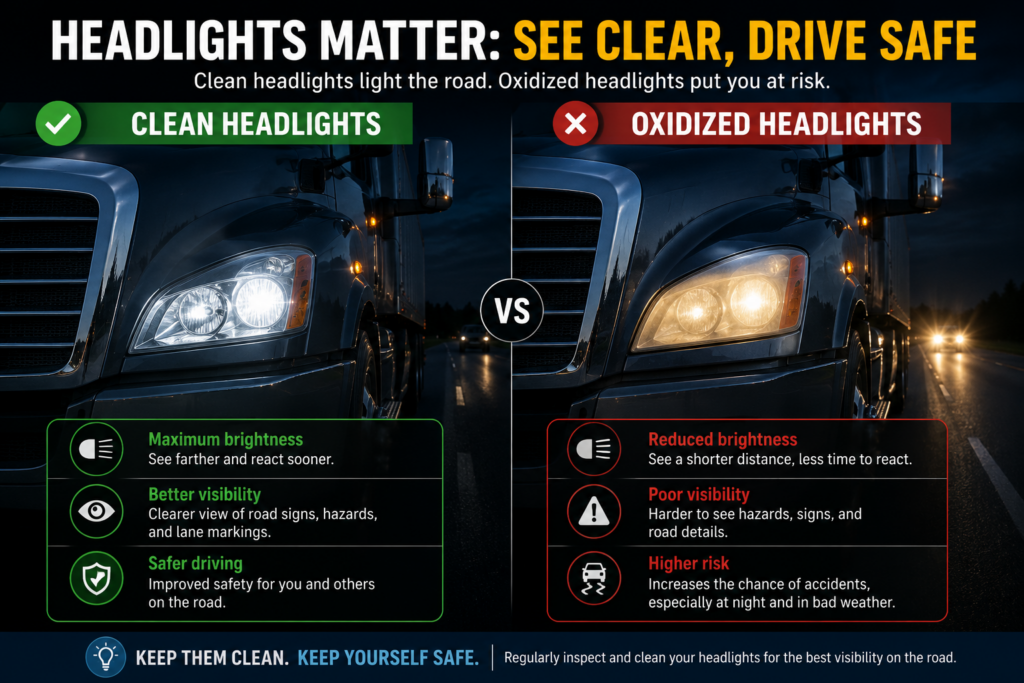
Your headlights are your primary source of visibility after sunset. Dirty, cloudy, or improperly aimed headlights reduce the distance you can see and make it harder for other drivers to notice your vehicle.
Before driving at night:
- Clean both headlights regularly.
- Replace burned-out bulbs immediately.
- Check that high and low beams function correctly.
- Make sure headlights are properly aligned.
Many drivers don’t realize that headlight lenses become cloudy with age, reducing light output by a significant margin.
2. Reduce Your Speed
Driving too fast at night leaves less time to react when something suddenly appears in the road.
Your stopping distance includes:
- Reaction time
- Braking distance
- Road conditions
If you cannot stop within the distance illuminated by your headlights, you’re driving too fast for the conditions.
The Federal Highway Administration (FHWA) recommends adjusting your speed according to visibility and weather conditions:
https://highways.dot.gov/
3. Avoid Looking Directly at Oncoming Headlights
Bright LED and HID headlights can temporarily reduce your vision.
Instead of staring directly at approaching vehicles:
- Look slightly toward the right edge of your lane.
- Use lane markings as a guide.
- Keep your windshield clean to reduce glare.
- Dim your high beams when another vehicle approaches.
Never use high beams when following another vehicle closely.
4. Stay Alert for Fatigue
Fatigue is one of the biggest dangers during nighttime driving. Your body naturally becomes less alert after dark, especially between midnight and 6 a.m.
Signs of driver fatigue include:
- Frequent yawning
- Heavy eyelids
- Difficulty concentrating
- Missing road signs
- Drifting between lanes
The Centers for Disease Control and Prevention (CDC) warns that drowsy driving can impair reaction time as much as alcohol:
https://www.cdc.gov/sleep/features/drowsy-driving.html
If you begin feeling sleepy, pull over in a safe location and rest.
5. Keep Your Windshield Clean
A dirty windshield dramatically increases glare from streetlights and headlights.
For the best visibility:
- Clean both the inside and outside glass.
- Replace worn windshield wipers.
- Refill windshield washer fluid regularly.
- Repair cracks that scatter light.
Even a thin film of dust can make nighttime driving much more difficult.
6. Increase Following Distance
Limited visibility means you should leave more space between your vehicle and the one ahead.
A greater following distance provides more time to react if traffic suddenly slows or stops.
Professional truck drivers often increase following distance even further because heavy vehicles require longer stopping distances.
7. Watch for Wildlife
Animals are much more active during dawn, dusk, and nighttime hours.
Be especially cautious:
- Near forests
- Rural highways
- Areas marked with wildlife crossing signs
If you see one deer crossing the road, expect others to follow.
Avoid swerving suddenly at highway speeds, as losing control of your vehicle may be more dangerous than the animal itself.
8. Limit Distractions
Night driving already requires more concentration than daytime driving.
Avoid:
- Texting
- Adjusting GPS while moving
- Eating
- Looking at your phone
- Searching for items inside the vehicle
Keeping both hands on the wheel and your eyes on the road significantly improves reaction time.
9. Don’t Overdrive Your Headlights
One of the most common nighttime driving mistakes is “overdriving” your headlights.
This happens when your stopping distance exceeds the distance illuminated by your headlights.
Always drive slowly enough that you could safely stop if an obstacle suddenly appears ahead.
10. Prepare Your Vehicle Before Every Night Trip
A quick inspection before driving can prevent many roadside emergencies.
Check:
- Tire pressure
- Brake lights
- Headlights
- Turn signals
- Windshield washer fluid
- Mirrors
- Fuel level
The Federal Motor Carrier Safety Administration (FMCSA) emphasizes the importance of vehicle inspections, especially for commercial drivers:
https://www.fmcsa.dot.gov/safety
Final Thoughts
Driving at night doesn’t have to be dangerous, but it does require extra caution. Maintaining your vehicle, slowing down, avoiding fatigue, and staying focused can significantly reduce the risk of accidents.
Whether you’re driving a passenger car or a commercial truck, safe nighttime driving starts with preparation and defensive driving habits. By following these recommendations and staying alert, you’ll be better equipped to handle the unique challenges that come with driving after dark.