
A rest stop is not always restful. Parking may be tight, the day may have run long, and a driver can arrive mentally tired before the truck is even in a space. Still, a break can do more than satisfy a logbook requirement. With a few repeatable choices, it can become a useful reset before the next stretch of road.
Choose the Stop Before You Need It
A calmer stop begins with planning. During a fuel break, look ahead at parking options and give yourself more than one choice. A primary location and a backup prevent the last-hour rush that pushes drivers toward an unfamiliar or uncomfortable place. Check the available time, expected weather, and the approach to the lot. The goal is not to find a perfect stop; it is to arrive with enough margin to make a careful decision.
Create a Small Arrival Routine
Once parked, take a slow minute before reaching for the phone. Secure the truck, note your location, and make sure the items you may need outside are easy to reach. A flashlight, water, keys, and a charged phone are simple things, but having them in one predictable place reduces the distracted back-and-forth that comes with fatigue. If the area does not feel right, listen to that signal and use a different option when possible.
Give Your Body a Change of Scene
Driving asks the body to stay still and alert for long periods. A five- or ten-minute walk in a well-lit public area can help release some of that tension. Stretch your calves, shoulders, and hips gently, then take a few slow breaths before climbing back into the cab. This is not a workout plan. It is a way to mark the end of one task and make room for the next.
Keep an Easy Comfort Kit
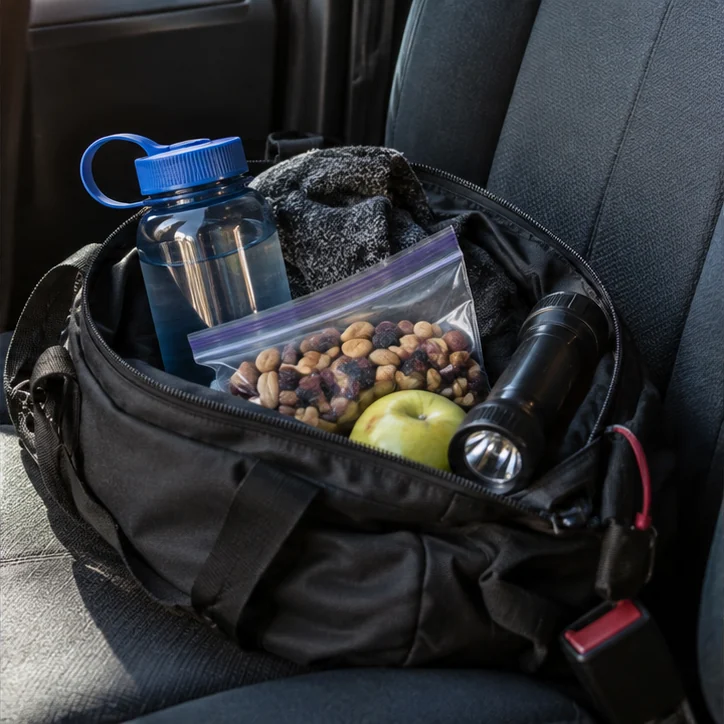
A small bag with a water bottle, shelf-stable snack, basic hygiene items, a light layer, and a flashlight makes a stop more manageable. It prevents a tired driver from treating every small need as a reason to search through the cab or make another unnecessary trip across a busy lot. Comfort is not separate from safety; being warm, hydrated, and prepared makes it easier to think clearly.
Let the Break Be a Break
Many drivers use a stop to catch up on messages, paperwork, and route changes. Some of that work is unavoidable. Try to put a boundary around it. Handle the essential update, then take a few minutes with no new input: no scrolling, no problem-solving, and no pressure to optimize the whole next day. A brief quiet pause can lower the sense of urgency that builds after hours of traffic and schedules.

Carry the Habit Forward
The best rest-stop routine is short enough to survive real life. Plan parking early, arrive deliberately, move a little, keep useful items close, and give your attention a moment to settle. Those actions do not make every stop perfect, but they make it easier to leave with more patience and a clearer mind. That is a meaningful advantage on a long haul.